Showing posts with label books. Show all posts

Sunday, July 12, 2009

Now With More Zombie Mayhem

Pride and Prejudice and Zombies Pride and Prejudice and Zombies by Seth Grahame-Smith


My review


rating: 5 of 5 stars
This was so much fun. Like so many people out there, I've known the story of Pride and Prejudice most of my adult life... I first read the book sometime in my late teens or early 20's, I've seen Bridget Jones so many times I could quote from it, and I was surprised at how much I loved the Keira Knightly version of the movie and I even teared up during a few of the more romantic scenes.

So, I walked into reading this with a whole catalogue of mental and visual images of the story of the Bennet family and their suitors. As I read it, I found myself alternating between picturing Keira K. and Colin Firth and so many familiar faces in the story... but what is so great about this version is what's UNFAMILIAR, or "unmentionable."

As the title says, this is the story of Pride and Prejudice set in a world that's both familiar (British romance) and completely new (England's decades-long war against the undead). Fun! Elizabeth and her sisters are no shrinking violets, in fact all 5 of them have been trained as Shaolin warriors and sworn to defend England against the "sorry stricken." But they don't let a little blood and gore get in the way of their romantic pursuits... so the gang's all there, with Wickham, Bingley, and the dashing Mr. Darcy all reporting for duty to sweep those Bennet girls off their feet. (Well, not Wickham.... he's still a jerk in any version.)

If you like the basic story of Elizabeth and Darcy, and if you're a fan of the supernatural like I am, this is a really entertaining, easy book to read. Now, I'm eagerly anticipating Seth Grahame-Smith's next book, which quite possibly could become my favorite book of all time. I've heard rumors of the title: Abraham Lincoln, Vampire Hunter. Bring it!


View all my reviews.

Wednesday, July 01, 2009

Encyclopedic Knowledge

The Know-It-All: One Man's Humble Quest to Become the Smartest Person in the World The Know-It-All: One Man's Humble Quest to Become the Smartest Person in the World by A.J. Jacobs


My review


rating: 4 of 5 stars
This is an enjoyable read. The author, a journalist who's spent his career at Entertainment Weekly and Esquire, decides he needs to do some intellectual heavy lifting to stop the "dumbing down" of his own life. So he sets out to read the entire Encyclopedia Britannica, A-Z.

Over the course of a year, he does it. He learns a lot about people, history, the world, and also about himself and particularly his relationship with his father and his own thoughts on future fatherhood. The book is organized in alphabetical chapters, as he offers snippets of fun facts about the encyclopedia entries he's reading, reactions from his friends and family to this all-consuming project, and stories from his research into the worlds of Mensa, Jeopardy, and Who Wants to be a Millionaire?.

Jacobs is funny and thoughtful, and this is a good book to be reading if you're traveling or trying to find a good distraction, because it's easy to just read in little bits and pieces. I give it 4 stars, and I'll probably read his next book about when he read the entire Bible start to finish.


View all my reviews.

Saturday, June 06, 2009

How Lines Were Drawn

How the States Got Their Shapes How the States Got Their Shapes by Mark Stein


My review


rating: 4 of 5 stars

This is an enjoyable little book about the geography of the United States. It's organized almost like a reference book, with a quick intro chapter (called DON'T SKIP THIS) that talks about how the US came to have its current borders as a nation, then with short 5-6ish page chapters on each of the 50 states - plus the District of Columbia! - in alpha order.

I think this would be a fun book to supplement any geography class. It touches upon US history, but really focuses on the specifics of how state borders emerged -- the point of this book is not to tell the story of our expansion or the rich narrative of our regional histories, but instead to illuminate and clarify all those quirks and oddities on the map.

So, here's what I learned. These are the main factors, as a whole, that contributed to the way the lines were drawn between the states... some of which I expected, but some were very interesting new insights about the method behind the maps:

* Colonial boundaries established by British Kings and the original charters for the colonies

* Treaties with other nations, establishing boundaries between first the British colonies and then the growing US and those other countries that had claims in North America - mostly Britain, France, and Spain.

* Compromises, resolutions, or outright land grabs involving Native American territories.

* Natural boundaries, like rivers and mountain ranges. These aren't just a good natural place to put a border, but it often came into play that some states might have a claim to land just on the other side of a river or a range, but in the early days of our country it was very hard to enforce laws on the other side of natural boundaries so states often gave up those claims to lands with unruly, criminal elements seeking to hide out beyond the reach of the law. Interesting. Plus, the chapter on Utah very diplomatically implies that those particular state boundaries were drawn *around* the Mormons themselves cuz the US government wanted to keep them contained and limit their access to major resources.

* Access to natural resources, like coal, gold, or silver mines, or perhaps more importantly access to waterways - rivers, the Great Lakes, or the oceans. Many states made claims and compromises trying to ensure their access to water, which equals access to commerce and wealth.

* Sometimes, the lines that were drawn were mistakes -- erroneous surveying lines, or misjudgements about what was 10 miles from what -- and those mistakes live on as current state borders.

*After the Revolution, there were many border conflicts to resolve since those original states had been founded with charters granting them access all the way to the Pacific Ocean (a little unrealistic since Britain didn't own that land) and then all the way to the Mississippi following the Louisiana Purchase. In the North, these conflicts between the New England states, NY, and Pennsylvania, all had to be resolved through somewhat painful compromises, court decisions, and in at least one case a border war. In fact, I was surprised at just how many small border wars there have been between the states all across the country. In the South, the bigger states (Carolinas, Virginia, Georgia) deeded back much of their western lands to the US itself to create new territories, which then became new states.

* Congressional interests -- this was the fascinating stuff I really learned. There were two main ideas involving Congress that really shaped the states:

-> The desire to create states so that they come in on equal footing, land-wise. Have you ever noticed how so many of the states are approximately the same size? That was by design! Especially in the former Louisiana Purchase territories and the West, where colonial boundaries weren't a factor, Congress specifically carved out states with roughly equal degrees of latitude and longitude. Many of those states are 7 degrees wide by 3 degrees tall, with a little variance here or there, but that was done on purpose. The goal was to try to give each new state equal opportunity with access to land and natural resources.

-> Here's the biggie -- of course, for all those states being created in the early 1800's, slavery was a major factor. Congress was trying to keep a balance between slave states and free states, and through the border lines drawn in the Missouri Compromise and the Compromise of 1850, there was a very specific effort made to keep equal representation in Congress between the different sides. The Missouri Compromise said that slavery was not allowed above the 36/30 parallel, and you can still see that dividing line very clearly on the map across nearly half the country. As more states kept being added and the argument kept getting more intense, the growing nation inched further and further towards Civil War.

This was all interesting stuff, and the book is a very fast read. It's a good refresher on the states as a whole, and while it doesn't go too deeply into the history of the major decisions and events that expanded our borders, it still has some great fun facts about our quirky country.

View all my reviews.

Monday, May 25, 2009

Hit By a Farm

Hit by a Farm: How I Learned to Stop Worrying and Love the Barn Hit by a Farm: How I Learned to Stop Worrying and Love the Barn by Catherine Friend


My review


rating: 5 of 5 stars
I thoroughly enjoyed this book. It's the light, funny, and sometimes poignant story of the author and her partner buying a farm and learning how to manage a flock of sheep, goats, chickens, ducks, geese, dogs, and the small vineyard they're attempting to grow in Minnesota.

The book is fun on its own, but reading it was an intensely personal experience for me. Why? Because I grew up on a small farm in Upstate NY, where we had a flock of sheep, goats, chickens, ducks, geese, dogs, and a very small collection of grape vines and fruit trees. The author's stories of lambing in the spring, of helping the animals suffer through freezing-cold winters, of the crazy pace of something always going on - and usually going wrong - all sounded so familiar. I chuckled many times, and even teared up at a few points, remembering so many similar stories from our farm.

But what was most interesting to me was the emotional journey the author faced, as creating the farm was really her partner's dream and she dealt with the challenges of being completely consumed (and sometimes subsumed) by helping bring that other person's dream to life. That rang very true, as well, since our farm had always been my Dad's lifelong dream, not my Mom's, but my Mom was very supportive and ended up doing yeoman's work in keeping it running for 20 years. They used to say that the farm was my Dad's hobby, but my Mom's full-time job, and that was very true for a long time. Reading Catherine Friend's stories, it made me wonder how much my Mom ever resented the lifestyle she fell into, and it gave me a new perspective on why she made some of the choices she made while we were growing up (like going back to school and then back to work when she didn't "need" to).

I'm sending this book to my parents and I hope they'll both read it, though I know they'll each get very different things out of it. I think Dad will laugh at all the crazy memories, like I did, but I expect Mom will enjoy reading about the emotional struggles of a kindred spirit on the farm.


View all my reviews.

Sunday, April 26, 2009

Finding Yourself In a French Cookbook

Julie and Julia: 365 Days, 524 Recipes, 1 Tiny Apartment Kitchen Julie and Julia: 365 Days, 524 Recipes, 1 Tiny Apartment Kitchen by Julie Powell


My review


rating: 5 of 5 stars
I really, really loved this book! Lately I seem to have really embraced the "food" genre - ranging from books on growing to cooking to eating food and the role that food plays in both our physical and emotional health. JULIE AND JULIA is a great addition to the shelf. It reminds me a bit of EAT, PRAY, LOVE, but without all the self-righteousness and religious stuff. I liked that book a lot, but JULIE AND JULIA is much more my (snarky) style.

I can totally relate to the author, an early-thirty-something trying to find a meaning in her life once she hits that post-20's "you mean, this is it?" realization. Julie Powell manages to get through that existential crisis by finding a new purpose in channeling Julia Child and spending a year conquering some really intimidating recipes. Perhaps I'm doing a bit of the same by trying to find more control and substance in my own life through cooking and, hopefully soon, growing healthier food. (And hopefully I'll find an Eric of my own someday!)

Plus, Julie Powell endeared herself to me completely in the cheesy end pages of the paperback edition, once you get through the reading group guide and the usual interview with the author. She gives a list of other books that might be of interesting, and they include the usual cookbooks and biographies of Julia Child. But there, at the very end, she reveals herself to be not only a die hard fan of Buffy the Vampire Slayer but also a devotee of Max Brooks and his Zombie books! She's like my soul sister. :-)


View all my reviews.

Sunday, April 19, 2009

It's Almost Time to Plant My Own Balcony Garden

The $64 Tomato: How One Man Nearly Lost His Sanity, Spent a Fortune, and Endured an Existential Crisis in the Quest for the Perfect Garden The $64 Tomato: How One Man Nearly Lost His Sanity, Spent a Fortune, and Endured an Existential Crisis in the Quest for the Perfect Garden by William Alexander


My review


rating: 5 of 5 stars

This was really fun. The author is an IT professional by day, and obsessive, happy, addicted gardener by nights and weekends. The book tells the story of roughly 10 years of Alexander's adventures with his family in building his dream garden in the clay soil of the Hudson Valley, and his competition with woodchucks, deer, Japanese beetles, all kinds of grubs and worms and whatnot, and that darn clay soy itself, to bring his dream to life. He's got determination and a great sense of humor, and if you liked Barbara Kingsolver's "Animal, Vegetable, Miracle" you'll probably like this one too. Reading it outside on my balcony in these early days of spring has me thinking about my own, small-scale gardening adventures to come, as I'm going to attempt (for the 2nd time) to grow my own herbs and to try growing strawberries, too.


View all my reviews.

Monday, April 06, 2009

Quick Hits from My Bookshelves

The Return Of Depression Economics And The Crisis Of 2008 The Return Of Depression Economics And The Crisis Of 2008 by Paul Krugman


My review


rating: 4 of 5 stars
I finally finished this book after starting it in the fall and putting it aside for lighter stuff. Krugman does an excellent job of explaining the reality of economics, not just theoretical models, and I really feel like reading this helped me understand our current situation a little better. I should read it 3 more times to be able to grasp everything fully -- but that's more a sign of just how muddy our current mess is and not any reflection on the book!


View all my reviews.

Storm Front (The Dresden Files, Book 1) Storm Front by Jim Butcher


My review


rating: 3 of 5 stars
This is light and very fast-paced... I need a quick mystery every once in a while to break up the other book club or non-fiction style books I read. If you're into wizard private investigators, give it a try. I might just sign on for even more of this multi-book series.


View all my reviews.

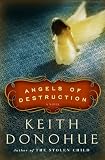
Angels of Destruction: A Novel Angels of Destruction: A Novel by Keith Donohue


My review


rating: 4 of 5 stars
I really enjoyed Donohue's second novel, a follow-up to the great fantasy THE STOLEN CHILD. This book explores the relationships between a mother and her long-disappeared daughter, a grieving woman and a mysterious child who appears on her door, and a sad little boy who finally makes a new friend, who may be more than she's telling. The story is told with an interesting narrative structure, alternating between several main voices, and flipping between the "present" day of 1985 and the key events of 1975 that set everything in motion. Like his first novel, Donohue weaves together a very believable story of human emotions with just enough mystery and supernatural fantasy to keep you turning the pages late into the night, hoping that everything works out well for these characters.


View all my reviews.

Sunday, March 22, 2009

My Second Foray Into the Jungle

A few years ago, my parents took a trip down the Amazon and explored all of the exotic flora and fauna of the jungle. I did *not* inherit their adventure-travel genes, at least not yet, so the closest I'm getting to the vast, mysterious jungle is through my own armchair explorations in the pages of a few good books.

I just finished reading a new non-fiction story of the jungle, David Grunn's The Lost City of Z: A Tale of Deadly Obsession in the Amazon. Grunn, a journalist, weaves together the story of British Victorian-era explorer Percy Fawcett and his obsession with finding a reputed lost ancient civilization in the Amazon with Grunn's own growing obsession with solving the mystery of what happened when Fawcett and his team disappeared seemingly without a trace.

This book is part biography, as Grunn spends the first half or so detailing Fawcett's early military career and then the many expeditions he made into the South American interior, building his reputation and fame in the years before his final journey into the unknown. (He is the inspiration for Sir Arthur Conan Doyle's The Lost World). Fawcett is called the "last Victorian gentleman explorer," representing the end of an era as exploration itself changed. What began as a field where courageous, and often eccentric, adventurers made names for themselves and victories for science by cutting through the jungle using their wits and their physical prowess was transforming into a field where new technologies like wireless radios, airplanes, and aerial photography would soon make people like Fawcett seem like foolhardy anachronisms.

The book is also part mystery, told from two perspectives 80 years apart. The world was paying attention when Fawcett and his team, which included his adult son and the son's best friend, disappeared in the jungle. Fawcett had arranged for financing that included support from an international newspaper syndicate following the team's progress through his periodic reports from the field. When the team lost touch, many from Fawcett's family and followers rallied to send search teams in after him, but many of those explorers met their fates in the jungle as well. These expeditions to find Fawcett, or a trace of what happened to him, have continued right up to the present day. The author Grann embarked upon his own adventure, from British archives to Brazilian museums to the Amazon jungle itself, investigating Fawcett's life and presumed death at the hands of the wild place he loved so much, as well as trying to find that Lost City of Z along the way.

I couldn't help but compare this book all along with another book I read 2 years ago, Candice Millard's excellent story about Theodore Roosevelt's own expedition to forge the "River of Doubt," an uncharted tributary of the Amazon. To my pleasant surprise, some of the same real-life characters appeared in both books, as many of the Brazilian officials encountered both Roosevelt and Fawcett in the heyday of European exploration into the jungle.

While the subject matter is similar, I enjoyed Millard's book more because her protagonist - the great TR - was such a charismatic, compelling, and relatable character. Grann suffers a bit, in my opinion, because Fawcett himself comes across as being aloof, unsentimental, obsessive almost to the point of madness. He doesn't seem to have strong family or emotional ties, and while Grann does demonstrate his notably progressive approach (for the time) towards dealing with the Indian tribes he encountered and shares some of Fawcett's interesting experimentation with spirituality and the occult, Fawcett remains a somewhat unreachable character. Since you know from the beginning that he doesn't make it back out of the jungle, I didn't really find myself rooting for him much. Instead, I enjoyed more of Grann's historical information about the Victorian explorers, the South American tribes, and the years of continued searching.

According to the Internets, Brad Pitt has snapped up the movie rights to this book, so we may soon be seeing Fawcett's adventures on the big screen. If Brad plays him, Fawcett will probably be a lot more relatable... so I'll be sure to check that out!

Sunday, March 01, 2009

The Secret of Success

Outliers Outliers by Malcolm Gladwell


My review


rating: 4 of 5 stars
Our book club chose OUTLIERS this month, and I enjoyed Malcolm Gladwell's latest effort. I have read both of his previous books, THE TIPPING POINT and BLINK, though I still think THE TIPPING POINT is his best and he's been coasting a bit with lighter stuff ever since.

OUTLIERS has a simple premise: people who have achieved great success have not actually done it alone, they were helped along the way by having a variety of opportunities created by timing, culture, and the actions and support of the people around them. Well.... that premise is so simple it almost makes you want to say "Duh."

But Gladwell's talent has always been to find compelling examples to support his thesis, and to tell those stories in a page-turning way. That's where his background as a journalist really shines, even if it may sometimes seem has if he's just cherry-picked a few good examples that strengthen his argument and leaves the hard research to others. His books are very readable, but not necessarily heavy on the first-hand research.

Anyway, in OUTLIERS he uses the examples of Bill Gates and the Beatles among others to demonstrate how circumstances have just as much of an effect on some one's success as hard work and innate talent, though he stresses they are all equally important. He tells the chilling stories of Korean Air Lines' disastrous crash record to demonstrate how culture, and the way it dictates communication in a hierarchy, impacts a company's success. (And that whole section made the prospect of flying scary all over again.) He also uses two different tales of immigration - European Jews in the garment industry in NYC and Scotch-Irish in Appalachia - to explain how cultural tendencies are handed down among generations and led to current behaviors in surprising ways.

Overall, OUTLIERS is fun and filled with interesting cocktail-chatter-style new information. Sure, it's light and probably won't stick with me for long, but I'm glad I'm continuing on with Gladwell's career, as he follows along a path he describes very lovingly in the epilogue as set in motion by his own ancestors not so long ago.


View all my reviews.

Sunday, February 15, 2009

Who's In Her Bed?

Highlander In Her Bed (Signet Eclipse) Highlander In Her Bed by Allie Mackay


My review


rating: 2 of 5 stars

This is a trashy romance novel. I've read trashy romance novels before, even medieval-era stories of knights and damsels in distress, and while they're formulaic they at least usually have some kind of plot and character development to go along with the naughty bits. Sadly, this book was about 88% naughty bits and 12% ridiculous plot, the kind in which I just kept yelling at the main character for her stupid behavior.

So a modern woman buys a 14th-century handmade bed...that's haunted...by a medieval Scottish knight...whose forsworn enemies are the woman's own ancestors...and she moves it into the ancestral castle...and proceeds to have ghostly sex with him, a lot. The "forsworn enemies" part didn't last long, and the main character was supposed to be a plucky modern gal but I lost complete patience with her when she refused to believe the Scottish knight was a ghost, and thus instead must have thought he was a stalker/intruder but had no problem with that. Ack! Call the police if a strange man shows up in your bedroom and threatens you with a dagger! (No, that's not a metaphor. An actual dagger.)

It all gets resolved in the end, they all live happily ever after - 7 centuries and ancient curses be damned. The book got better towards the end, and by that time I just gave up on the author's terrible writing style and wanted to figure out how they'd finish out the formula. The naughty bits were a lot naughtier than I expected, as well, and I'd just find myself giggling at some of the metaphors and descriptions!

I did give this 2 stars, rather than 1, because it was a very entertaining birthday gift and I look forward to discussing it with Selena in full detail! We might have to underline passages to debate just what the author was thinking. (No, not *those* passages!)

View all my reviews.

Saturday, January 31, 2009

World War Z

World War Z: An Oral History of the Zombie War World War Z: An Oral History of the Zombie War by Max Brooks

My review


rating: 5 of 5 stars
People have been suggesting this book to me for years. Zombies have never been my favorite (fictional?) supernatural character, and I'll still pick vampires over zombies in any fight for my time and attention. BUT -- WORLD WAR Z has now turned out to be one of my favorite books of all time.

Max Brooks is a remarkable writer. He has created a vision of such a complete world, with a history all its own that feels incredibly real. His imagining of a zombie apocalypse is pretty darn terrifying, but with the choices he made in structuring this book he made the work even harder for himself.

By using the brilliant format of "Studs Terkel-style" oral histories to tell the global story of the Great Panic, the Zombie War, and its aftermath, Brooks had to create an international palette of characters who could relay their incredibly realistic-feeling personal experiences and tell the complete story. I can't imagine how much research he must have done in order to create these characters and their varied perspectives shaped by everything from apartheid-era South Africa to the villages of rural China to Castro's Cuba to the declining Russian empire. I was really astounded at how vividly he wrote these characters, and how their backstories helped illuminate the larger story of WORLD WAR Z.

Now I can't wait to read the Zombie Survival Guide so I can prepare for myself!


View all my reviews.

Saturday, January 17, 2009

Culture Roundup

It's been a very busy couple of weeks, so I apologize for being so quiet on the blog. But have no fear, I've still been a cultural consumer! Here's a quick roundup of the last week or so:

I finally made my way to the Corcoran Gallery of Art for the first time (I know, shameful! I've lived here almost 7 years!) to see the Richard Avedon show, Portraits of Power. This is a great exhibit and it's only open until January 25, so I hope folks out there go see it soon! It's a collection of Avedon's photographic portraits of people of power and influence in many different spheres -- everyone from politicians to artists to activists to policymakers to the Dalai Lama -- shot over the course of several decades before Avedon's death in 2004. What I loved about this show was the sense of biography, both of our culture and of many of his individual subjects. There were a handful of people that Avedon photographed several times over the course of their lives, and it was fascinating seeing the way they had changed. And, what I really loved was picking out so many of his well-known subjects that he'd photographed in the 70's or 80's, and were labelled according to their positions then, and remarking upon how their lives changed after the photo was taken. For example, he happened to photograph a young State Senator from Illinois after he gave his keynote speech at the DNC in 2004, shortly before Avedon's death. We all know what has become of that particular rising star!


I enjoyed a long Sunday afternoon of playing Ticket to Ride with these two gamers. I think I'm finally getting the hang of this good beginner-level strategy game, affectionately called TRAINS by everyone I know, where you have to build train routes between stations in a way to earn the most points possible. We started with a round of the US version of the game before moving on to the European version which is so much harder! I'm guessing the European version is harder for us Americans mostly because we do not have the same inherent knowledge of the map of Europe -- and I hope Europeans have a harder time playing the US version for the same reason! -- but the Europe edition does change the rules a bit to make the strategy of the game a lot more challenging. I learned the hard way that tunnels SUCK and lost 3 turns trying to build a short tunnel in Spain. Bah! But I'm still really loving this game and can't wait to play either version again soon!


Then, our book club met on Tuesday night to discuss Brunonia Barry's The Lace Reader. While this was not my favorite book ever, we did have a good discussion and all agreed that Ms. Barry's novel did not deserve the call out as Entertainment Weekly's #2 worst book of 2008! This tells the story of a young woman returning to her home of Salem, Massachusetts to revisit family secrets, and it's a family in which the women have passed town the tradition of both making and "reading" lace. Like reading tea leaves, lace reading gives these women the ability to see or sense the future. I loved the setting, which was very true to what I remembered from visiting the funky, interesting, quaint and mysterious town of Salem about 10 years ago, and the novel has some quirky characters who make the story more compelling. The author's writing style, however, and the narrator's own voice can be off-putting, so I sometimes felt I kept reading the story in spite of not really liking the main character or how she was telling it. But, it's a very fast read and the setting and atmosphere pull you in enough that it's worth picking up a (paperback) copy if you like small-town mystery/psychological thriller stories.

Sunday, January 04, 2009

Spending the Weekend with Laura and George

I have spent the last 48 hours fascinated by the lives of Laura and George Bush. Well, not really their lives, but fictional versions of their lives -- as imagined by Curtis Sittenfeld in her latest bestseller American Wife.

If I wasn't already a huge fan of Sittenfeld through her earlier books, Prep and The Man of My Dreams, I probably would not have chosen to read this one. I mean, really, the life of Laura Bush and the ups and downs of her marriage to W? That doesn't sound like something I'd enjoy, because what is there that we don't already know from years and years of bio pieces and from our own opinions of the pair? Well, this book is proof of what a really good fiction writer can do -- she can take a familiar story and make it seem new, even turn it into a page-turner where you're actually wondering what will happen next even if you already know.

This is a work of fiction, loosely based on the story of the Bushes but with a great deal of their personal and inner lives imagined by Sittenfeld. The "American Wife" is Alice Lindgren, a quiet, reserved Democratic-leaning librarian from small-town Wisconsin who marries Charlie Blackwell, the charismatic but somewhat layabout scion of an elite Republican dynasty. Some of the familiar highlights of the Bushes' story are in here -- the tragic car accident, the alcoholism, the domineering mother-in-law, the baseball team, the Karl Rove-like advisor, the Presidency -- but the author takes some license in developing Alice's early years to flesh out a character who seems fuller than what any of us know about the real Mrs. Bush.

From this framework of history and biography, Sittenfeld builds a story of two very human characters and their very realistic marriage, all told from Alice's perspective. American Wife draws in the reader and raises questions about what one person's rights are in making decisions for a couple, and what one's responsibilities are for living out your beliefs. But I think Sittenfeld's biggest triumph is in making this story seem so authentic. While the characters and story are so familiar, it's easy to get so wrapped up in Alice and Charlie that you forget what the outcome is -- the story of their lives is so engrossing you forget that Charlie will someday become President.

I can't recommend this book enough -- if anyone else out there reads it I would love to discuss!

Next up? Since I feel like there's really only about 2 weeks left (squeee!) to read anything in the "Bush oeuvre" and have it still be relevant, I'm finally cracking open Secrets of the Tomb: Skull and Bones, the Ivy League, and Hidden Paths to Power. I think I hear Pacey calling me...

Monday, December 29, 2008

Now That's Entertainment, 2008 Edition

It’s time for the blog’s annual roundup of my favorite entertainment offerings of the year, with a few regrettable experiences thrown in for fun. I always have a hard time narrowing such subjective lists down to just one, so I’m offering up a few of my most memorable and enjoyable items in each category. I’d love to hear your favorites – and least favorites – too!

***General Spoiler Alert***

Movies

…Sean Penn’s performance and the overall message of Milk

...The "where are they now" updates and continued romantic adventures of our 4 favorite ladies in Sex and the City. This could've been all wrong, an unnecessary coda to a series (see my worst below) but instead really stayed true to the characters and kept their stories alive in ways that felt very authentic. But let's not talk about that bird on Carrie's head.

…The sweet romance and raunchy hilarity – and musical puppets! – of Jason Segel’s Forgetting Sarah Marshall

...The heartwarming, rat-a-tat snarkfest of Juno, even though it has forever tainted my view of the adorable Jason Bateman

In Bruges, the first movie that finally made me *get* the appeal of Colin Farrell, plus it was just a damn hilarious gangster flick that both kept me guessing and laughing

...Similarly, the shockingly funny latest installment from the Coen Brothers, Burn After Reading, has given me the deliriously enjoyable images of Brad Pitt and Frances McDormand as gym twits and... well, the less said about George Clooney's invention, the better.

Worst: The horrible, almost embarrassing (for all involved) experience that was The X-Files: I Want to Believe. The bigger the expectations, the worse the pain of disappointment.

TV

LOST’s Season 4, which came roaring back to greatness with the amazing storylines of the Oceanic 6, the mysterious ways of Benjamin Linus, the 4 Island newbies, Penny and Desmond’s epic romance, and – woosh! – the disappearance of the Island!!!!

Mad Men, the show that has brought back both the glamour and the outrage of the Camelot era, with its highballs, formal dress for dinner, and race and gender politics, plus it’s introduced us to the delectable (and talented) leading man for our generation, Jon Hamm as Don Draper (not to mention Jon Hamm as Dick Whitman).

…my Netflix discovery of the great guilty pleasure series Supernatural, with its monster-of-the-week fun combined with an overarching mythology and 2 hot leads (Dean's my fave), it’s nicely taken its place as the X-Files Light that I’ve needed.

…The pure escapist fun of Chuck, a comedy with more 80’s references than a Gilmore Girls episode and more wacky spy stuff than any hour of Alias

The Office, still firing on all cylinders with the heartbreakingly sweet Michael and Holly story and the solid PB&J romance, not to mention the awesomeness of Oscar and Andy becoming friends

…HBO’s brilliantly acted, written, directed, and produced miniseries John Adams, which should be required viewing for all history classes and acting schools

Music

I don't buy many albums these days, since I'm now more of a sampler on iTunes. But I did just buy one album that is immediately at the top of my list of favorites -- She & Him's Volume One. Everyone must get it now.

Most of my new music comes in the form of one-off downloads, usually either music I’ve heard in a movie or tv show, or something new by an artist I’ve always liked. My favorite downloads of the year:

…Backseat Nothing by The Del Fuegos (it was in an ep of Rescue Me)

…Sexed Up by the always awesome Robbie Williams

…Skinny Love by Bon Iver (from an ep of Chuck)

…Keeps Gettin’ Better by my favorite bombastic pop tart, Christina Aguilera

Books


…The smart, sassy, guilty pleasure fun of spending 8 books following the adventures, loves and losses of telepath Sookie Stackhouse and all of the very real creatures of the night in Bon Temps, Louisiana in Charlaine Harris’s “Southern Vampire” series (the basis for HBO’s True Blood)

…Neil Gaiman’s American Gods made for not only a great read, but also a great book club discussion. I particularly loved all of the different religions’ gods and symbols that he worked into the book, and it had me consulting my shelf of religion major textbooks from my college years.

…Finally reading the entire C. S. Lewis Chronicles of Narnia saga, and both reliving the adventures I’d loved as a child and seeing the symbolism and the sometimes inspiring and the sometimes questionable race and class references with the eyes of an adult.

Worst: Egad, the mess that was Breaking Dawn. If you ever want to learn how to ruin a series, follow Stephenie Meyer’s wholesome teen vampire romance story. The first three books were enjoyable marshmallow fun, but that final book was so awful it turned me into a Twilight-hater.

Theater

…the exuberant insanity on display in Studio Theatre’s Grey Gardens, which led me to both buy the Broadway cast recording and watch the original 1970’s era documentary upon which it was based. A full-scale cultural experience.

…the colorful, musical, whimsical, accessible, and just damn fun production of Mary Zimmerman’s Argonautika at The Shakespeare Theatre.

…the intense masculine energy of Studio Theatre’s The Brothers Size, practically a black box production with three actors sharing raw, emotional performances.

Museums and Tours and Stuff

…the guided tour of the Washington National Cathedral, which thankfully (for me) focused more on art, architecture, and both local and national history than on capital-R Religion. It’s a great pick for a family visit.

…DC’s many walking tours offer a great, low-cost evening out with friends, and the Embassy Row Walking Tour is another great combination of architecture, local history, diplomatic history, and lifestyles of the DC rich and famous.

Web

…Kudos to Joss Whedon, Felicia Day, Nathan Fillion and the incomparable Neil Patrick Harris for winning the “What I Did While The Writers Were On Strike” contest, Dr. Horrible’s Sing-Along Blog. It’s a brand new day, indeed!

…This year, I gained a new addiction and reconnected with many old friends on the way. Oh, Facebook, what would I do without you? Read more????

Podcasts

…The smarty-snarky-pants trio of John Dickerson, Emily Bazelon, and David Plotz provided me with the enhanced ability both to analyze the week’s news and laugh at it on Slate’s Political Gabfest

…The NPR folks at Planet Money are achieving the nearly impossible task of making the incredible economic stories of our age make sense.

…And, the three nerdy-fun academics at BackStory with the American History Guys, including the Prez of my alma mater, help provide a historical backdrop for the issues of our day, making us all feel better knowing that previous generations of Americans have struggled with and triumphed over the same things we’re going through now, and that history really can be more entertaining than fiction.

Sports

Yes, I have a sports category!

…watching my Richmond Spiders win the FCS National Championship by defeating the Montana Grizzlies 24-7!

…enjoying the great new sight lines, concession stands, scoreboard bells and whistles, and – oh yeah – a winning team (that day) at the new Nationals Stadium.

***So there you have it, my complete (exhaustive?) list of faves of 2008. What are yours???

Friday, November 28, 2008

Obsession Update

It's been a while since I've talked about one of my favorite obsessions, but it's one at the very forefront of pop culture these days it seems. For whatever reason, as long as I can remember I have just loved stories about vampires. Ah, those creepy-but-sexy, spiritually-challenged, powerful metaphors, those bloodsuckers. What would I do without them in my entertainment world? :-)

I dabbled in a few Anne Rice books growing up, lined up at the theater to see the sexy-but-cheesy Interview with the Vampire (the movie that helped launch a zillion Brad Pitt crushes?), I was a huge Buffy and Angel fan, I enjoyed that strange book The Historian and its retelling of the Dracula story, I try to catch both the scary and the silly vampire horror movies when they come out on DVD, and I've even read some questionable vampire romance novels over the years.

Yes, I've read all of the Twilight books. I enjoyed the series -- up until that horrific last book. I was willing to put aside Stephenie Meyer's slight writing style and the immature love story, cuz I still enjoy good vampire mythology and the books had it in small doses. But Breaking Dawn was just horrible, in my humble opinion, and I really hated the way that Meyer tied together all the storylines and had the characters doing things that just seemed ridiculous. So, the last book has pretty much made me a Twilight-hater, and I will not be seeing that movie. At least not in theaters. Someone has suggested we rent it on DVD later and make a drinking game out of it -- I'll leave the door open for that possibility. ;-)

But have no fear - even after feeling burned by that mega-hit series, I still love my vampires. And now, I am so completely engrossed in the world of that tough cookie, the wise-cracking, telepathic Louisiana barmaid, Sookie Stackhouse.

Sookie's such a great character that HBO is pretty much now betting on people falling in love with her and her crazy world to save their tv department -- but I don't have HBO so I actually haven't seen an episode of True Blood yet.

Instead, I've immersed myself in Sookie's world the old fashioned way - spending the last month speed-reading through all 8 (so far) of the books in Charlaine Harris's "Southern Vampire" series. In fact, I'm happy to tell you "how I spent my Thanksgiving vacation" - reading the 3 newest books in the series in the past 48 hours. Yeah, guilty pleasure or not, I'm hooked.

A friend who's also a bit of a vampire fan asked me how these books differ from the more popular Twilight books, and with no spoilers I can tell you that Ms. Harris has succeeded at the difficult trick of creating a fantasy world that seems both unnatural and utterly realistic. While this series looks like one you can easily disregard as just drugstore romance, there is a great deal of poignant social commentary here, on top of smart, fun characters, compelling mysteries and action scenes, and just enough romance (yes, some naughty bits) to keep you turning the pages late into the night.

Sookie lives in our time and place, kind of, with the main difference being that she is slowly learning that all of those legends and myths that have passed down for millennia are true. Vampires are real, and there's a whole hidden culture of supernatural beings living and working, and sustaining their own ritualistic traditions and political systems, right alongside us mere humans. In this world, vampires have "come out" to the general public. After the introduction of a synthetic blood that means they no longer need to feed on humans, the undead folks decide it's time to integrate themselves into the greater human population, with all sorts of reactions from those humans around the world. It's not too heavy-handed to say that there are obvious metaphors behind the scenes of Ms. Harris's stories, and she makes interesting statements on race, discrimination, harassment, prejudice, and fear throughout each of the books.

Aside from all that social commentary, the stories offer us up a smart, funny, courageous heroine in Ms. Sookie herself. As the series begins, she's a small-town barmaid who's used to being known as the town freak since the folks in her community aren't so understanding about her telepathic abilities. She's alone and a little lost, but as she begins to learn just how much more there is in the world around her, she becomes more confident, stronger, and more sure of herself. Unlike another vampire romance heroine I could name, she doesn't just become a submissive fool for love. She enjoys her new found femininity as she starts to meet men who appreciate her, including my favorite character, Eric the Viking vampire, who's most prominently featured in the 4th book, Dead to the World. But, even with all this male attention, she still knows that she's the best person to take care of herself. (Take that, Bella! Sookie is so much cooler a character!)

I don't want to go into too much more without revealing important stuff that plays out over the 8 books of the series -- but I did just close the page on the most recent, From Dead to Worse, and I *loved* the way it ended. So now I can't wait until book 9 comes out in May!

Sunday, October 05, 2008

History vs. Myth

It's starting to look a lot like fall these days, as the leaves are slowly turning, the nights are getting cooler, I'm sleeping with the windows open... that means it's the perfect time to curl up with a blanket and spend lots of time reading. Well, really, anytime is a good time for reading, but fall is especially perfect.

I just finished a great book - Tony Horwitz's A Voyage Long and Strange: Rediscovering the New World. I've now read almost all of Horwitz's books, and my favorites - like this one - are a combination of history book and travelogue. Horwitz, a journalist with a real love of history, tells his stories by alternating between well-researched and compellingly-written history and his own modern day perspective as a researcher visiting the sites where the history took place. It worked really well for Captain Cook in his Blue Latitudes, for the Civil War in his Confederates in the Attic, and now for America's discovery in A Voyage Long and Strange.

Horwitz sets the stage for this book with a trip to Plymouth Rock, where he realizes that - even for a relatively knowledgeable history buff like himself - most Americans have about 130 years of our own history missing. There's a giant void between 1492 when Columbus sailed the ocean blue and 1620 when the Pilgrims landed in Massachusetts. So he set about studying the history of the "discovery" of this new world, and learned a whole lot more than what is ever in our history books. Starting with the Vikings in 1000, and covering six centuries of European exploration before the English ever set foot on Terra Nueva, Horwitz provides fascinating details on the exploration and settlement of our sometimes-not-so-fair continent.

Okay, I admit, the subject sounds a little ho-hum at first, right? But trust me, this is great stuff. The usual suspects - Erik the Red, Leif Erikson, Ponce de Leon, Coronado, de Soto, John Smith, Pocahontas, Squanto - they're all there, but Horwitz goes far beyond the Trivial Pursuit level of factoids and tells the real stories of people struggling to establish settlements in a harsh land, of tragic culture clashes between native peoples and the European newcomers, of conquistadors and traders both claiming all that they see. And beyond the history, he explores the reasons why modern day Americans celebrate Columbus and the Pilgrims and, to some degree Jamestown, but the lost colony of Roanoke and the original European settlement St. Augustine are mostly forgotten or neglected. (Hint: PR is not a new thing.)

I really enjoyed this book, and my mind is so tickled with learning more of the real stories of history that I've now moved on to another historical subject entirely -- a biography of one of the most fascinating women in US history, "Princess" Alice Roosevelt Longworth. More good stories for these chilly weekend mornings!

So, readers, what books are keeping you company these days?

Sunday, July 27, 2008

When the Tuscan Sun Goes Down

I'm not really much of a fan of the "true crime" genre or of the author's usual thrillers, but something about Douglas Preston's new book The Monster of Florence caught my eye. Okay, I admit it, it was the cover. Yeah, yeah, you shouldn't judge... but that's why I picked it up anyway. And I'm glad I did.

This nonfiction work introduces us all to the grisly and horrific crimes of the Monster, a serial killer who terrorized the young lovers in the otherwise idyllic Tuscan countryside for nearly 20 years. When the author, Preston, moves his family to a little Tuscan village he soon learns that his olive grove was the scene of one of the Monster's brutal murders, and he soon becomes obsessed with learning more about the serial killer and the investigation into his identity.

Preston befriends Mario Spezi, an investigative journalist who has been following the case in the Italian press for decades, becoming a self-styled "Monstrologer." Together, they write this book. The first section details the history of the murders and introduces the many players in the Italian criminal justice system and their early theories. They follow several trails, sending many innocent men to prison in their search for the elusive serial killer.

The case flounders, though, and lies dormant for years and then enter Preston and Spezi. The second section of the book - perhaps even scarier and more chilling than the first - tells the story of the authors' direct involvement in the case. Their public investigations and challenges to the Italian legal system's theories ends up with both of them being accused of obstructed justice and, in Spezi's case, of even being involved in the killings. Preston is banned from Italy, Spezi spends time in jail and is sent to trial. The convoluted movements of the Italian police, prosecutors, and courts are mystifying... as many prominent men just seem to use the Monster investigation to leverage more power for themselves and grind personal axes with enemies around Florence.

The bumbling would be funny if it weren't for the fact that they STILL have not brought any killer to justice, though Preston and Spezi lay out a pretty strong theory as to the real identity of the Monster. This book is fascinating, a real page-turner, that leaves the reader with two strong cautionary impressions: don't go out parking in the Tuscan countryside under the new moon, and whatever you do, don't get arrested in Italy.

Sunday, July 20, 2008

Return from Narnia

Over the last few weeks, I've witnessed great battles, journeyed across the sea, traveled in a frightening underground kingdom, trembled at giants and witches, seen the birth and death of an entire world, and cheered for a talking warrior mouse. Yes, I have managed to read the entire series of The Chronicles of Narnia by C. S. Lewis.

(Note: There will be story spoilers ahead.)

The Books

First up, as I mentioned last month there is debate about in which order these books should be read. Though they were published in a different sequence, Lewis himself is attributed as saying that you should read them in the order that matches the chronology of Narnia - when the stories take place - rather than the order in which they came out. So, even though I have a box set that has them numbered by publication date, I read them in this order to follow Narnia's tale from its beginning to its end:

- The Magician and His Nephew (Book 6) - tells the story of the creation of Narnia by Aslan himself, and we meet the young boy and girl who grow to become the Professor and Aunt Polly in the later tales.

- The Lion, The Witch, and the Wardrobe (Book 1) - the most familiar story to most of us, as the 4 Pensevie children - Peter, Susan, Edmund, and Lucy - discover Narnia, free it from the evil reign of the White Witch, and become the great Kings and Queens who rule over a lasting peace.

- The Horse and His Boy (Book 5) - takes place during the reign of the 4 Kings and Queens, with the story of a slave boy and a talking war horse in a neighboring kingdom trying to break their bonds and journeying towards freedom in Narnia with the help of several key companions.

- Prince Caspian (Book 2) - brings the 4 Kings and Queens back to Narnia to find that nearly a thousand years have passed and their beloved kingdom is in the grip of an evil tyrant, so they band together with the rebel prince to reclaim the land in the name of all that is good.

- The Voyage of the Dawn Treader (Book 3) - a few years into Caspian's reign, he is joined by Edmund, Lucy, and their cousin Eustace (and perhaps the greatest Talking Animal of them all, Reepicheep) on a sea voyage to find the lost Lords of Narnia and explore the mysterious Islands beyond the known world.

- The Silver Chair (Book 4) - as the aged Caspian is near death, Eustace and his schoolmate Jill return to Narnia on a quest to find his long-lost and enchanted son Prince Rilian, joined by their memorable guide Puddleglum, encountering scary new lands and an evil witch that wants to conquer the kingdom.

- The Last Battle (Book 7) - it has been many years since Aslan and the mysterious children have appeared to champion Narnia, and it is nearly torn asunder by manipulative and greedy forces from within. The Last Battle brings the heroes back to Narnia to end their adventures where it began.

So, now that I've read them all.... how do I feel about them? Overall, I loved the series, and loved spending the past month absorbed in this quick-reading adventures. Lewis - like his real-life friend Tolkien and their heir apparent Rowling - has created such a rich, structured, believable alternate world that you have to admire his imagination and ability to maintain such a continuous story thread. And talking animals? Brilliant.

My two favorites, by far, are what I consider the best of the "journey" stories - The Horse and His Boy and The Voyage of the Dawn Treader. The Silver Chair is also a journey/quest story, but it wasn't quite as filled with the wonder and joy of discovering new lands or the same strong character development as my 2 favorites.

Both The Lion, the Witch and Prince Caspian are what I'd call "battle" stories - like Shakespeare's royal plays - and while both are strong on adventure and story development, TLTWATW is a lot more fun than PC.

Finally, in chronological order the series is bookended by what could be considered two "creation" stories -- and while I loved The Magician and His Nephew for the ways in which it introduced so many things that were incredibly new, I really didn't like The Last Battle. It tied things up in several ways that I didn't like, and had some inexplicable character development... I just have to think Lewis was trying to wrap it up and wasn't sure how.

The Allegory

This series is widely known for having strong Christian themes, and the allegory and symbolism are strong throughout all of the books. Regardless of my own agnostic/deist/secular way of looking at the world, the old religion major in me really loved exploring Lewis's interpretation of God through the powerful presence of the mighty and majestic Aslan.

Especially in the earlier books in the series, Aslan appears to embody each of the elements of the Christian Trinity... he is the Creator, the Sacrifice, and the Spirit that guides all of the characters in their quest for truth and goodness. He is stern but loving, supportive but scolding, and he can give as well as take away. Sounds a lot like Sunday School, doesn't it? The Lion - who is not a tame lion - just may be one of the best characters ever created in fiction, and Lewis manages to make him fit perfectly into either a child's adventure story or an adult's contemplation of the divine, however you want to read these books.

While Aslan's great sacrifice and resurrection in The Lion, The Witch may be his best-known allegorical scene in the series, I highly recommend anyone interested in exploring the religious themes in Narnia check out The Horse and His Boy. I think that's where Lewis does it best.

And.... how does it relate to LOST?

As this reading assignment came from our Lost and Gone Forever Book Club, it's important to note that the series does share a lot of things in common with our favorite show. Not only is there a new character on the Island named for Mr. Lewis, but it seems D&C and the team of fearless writers must have at least a little bit of the Narnia story on the mind. You see, time in Narnia passes differently than time in the real world, and it can be hard to keep track of just how many hours, days, or years have passed in Narnia while not a moment has gone by back in England. And there are mysterious portals between the "real world" and Narnia, and while some can plan their journeys often you just don't know when you're going to be pulled into the mythical land. And, oh, all of those mysterious Islands.... with their mysterious creatures... and shipwrecked pirates creating their own civilization? I think I've said too much. :-)

Sunday, June 29, 2008

Summer Reading List

Now that I'm almost done unpacking and decorating the new place, I can really dig in on my major summer assignments. Yes, like back during my school days of yore, I actually have a summer reading list! There are a lot of pages I have to read this summer, so let's get started:

First up, I'm happy to report that my fellow Losties and I on my favorite message board, Lost and Gone for a While, have started a "Lost Book Club" of our own. We're reading a wide variety of books said to be influences on our favorite tv show, and our first major project is (re)reading the full series of The Chronicles of Narnia by C.S. Lewis. As I've just recently learned, there's a bit of literary controversy over which order Lewis intended people to read the books - whether by publication date (the most common way they're packaged) or by the "chronology" of the Narnia story. We're reading it the chronological way, so I'm going through my old childhood set of books out of order.

So far, I'm midway through the 3rd chronological book. I read how Narnia began in The Magician's Nephew, how our four heroes conquered the White Witch and became Kings and Queens of Narnia in The Lion, The Witch, and The Wardrobe, and now I'm reading a story about a peasant boy who - I think - will soon acquire his own throne of a neighboring land during the reign of Peter, Susan, Edmund and Lucy next door in The Horse and His Boy. I'm loving it, getting so much more out of these books than I did as a child. I'll probably give you all a full report once I've finished the series.

At the same time, I'm working my way through Founding Mothers: The Women Who Raised Our Nation by Cokie Roberts. Since I am woefully underinformed about the subject, I'm finding this to be a great way to learn a little more about the founding era by focusing on the strong and fascinating women "behind" the Founding Fathers.

Cokie has a very light, breezy, and entertaining writing style that reports on the ladies very much from a modern perspective, so it's an enjoyable read. There is a brand new sequel out, Ladies of Liberty, that follows the story to the next generation of early American women, and hopefully I'll be able to get to that one sometime later this year, as well.

My book club friends here in DC have started in on an epic reading project, the 588-page (in paperback) American Gods by Neil Gaiman. I haven't started it yet, but I'm hearing great reports from people who are making their way through the story. It's also gotten a great author quote from Michael Chabon... and since I truly loved his Kavalier and Clay and truly hated his Yiddish Policeman's Union, I'm bound to have a strong reaction one way or the other to this one.

While the length of this one is a wee bit intimidating, I am still racking up lots of vacation time these days, perhaps I should do the trendy thing and schedule a "staycation" just to have a few free days to immerse myself in the book so I make sure I can read it on time for our August deadline!

And, finally, another "history geek" assignment for myself... in my continual self-education about the Civil War, I now have a copy of James McPherson's Pulitzer Prize winner Battle Cry of Freedom. I've been told by experts that if you're going to read only one book about the American Civil War, this is the one to read. (Of course, I've already read several... but I'll appreciate a big, comprehensive overview as more than a refresher!) For work purposes, I need to have this 952-page paperback read by mid-September.

So, you can see I've definitely got my work cut out for me! I've got to log off and start reading!

Saturday, May 10, 2008

Calling All Vampire Fans

I'm way behind the curve here, I guess, cuz I didn't know that they're already making a movie of Stephenie Meyer's beloved teen-immortal romance, Twilight.

Here's the teaser trailer and the full cast list.

I gotta admit, I'm a little concerned. Bella is much more fragile and introverted in my mind than Kristen Stewart appears to be playing her, and that guy playing Edward??? With spiky gelled hair and that emo look? Unacceptable. Plus, I refuse to believe that Jacob (my favorite in the triangle) could be played by an actor who was born the day before my SEVENTEENTH birthday. Sheesh. I don't even like their picks for Carlisle and Esme - Jennie Garth's husband and Ava/Rebecca from Grey's Anatomy.

I think this movie's gonna have a hard time pleasing the fans. And yes, I admit, I am one of them!